Septic Tank Treatment in the Washington, DC Area
If your commercial building isn't connected to a city sewer main, it likely relies on a septic tank. To ensure your system operates smoothly and avoid potential issues, it's crucial to have the tank pumped out regularly. For comprehensive septic tank pumping services, contact Magnolia Plumbing, Heating & Cooling today.
Magnolia Plumbing, Heating & Cooling provides septic tank pumping services in Washington, DC, and the surrounding areas.
Septic Tank Pumping
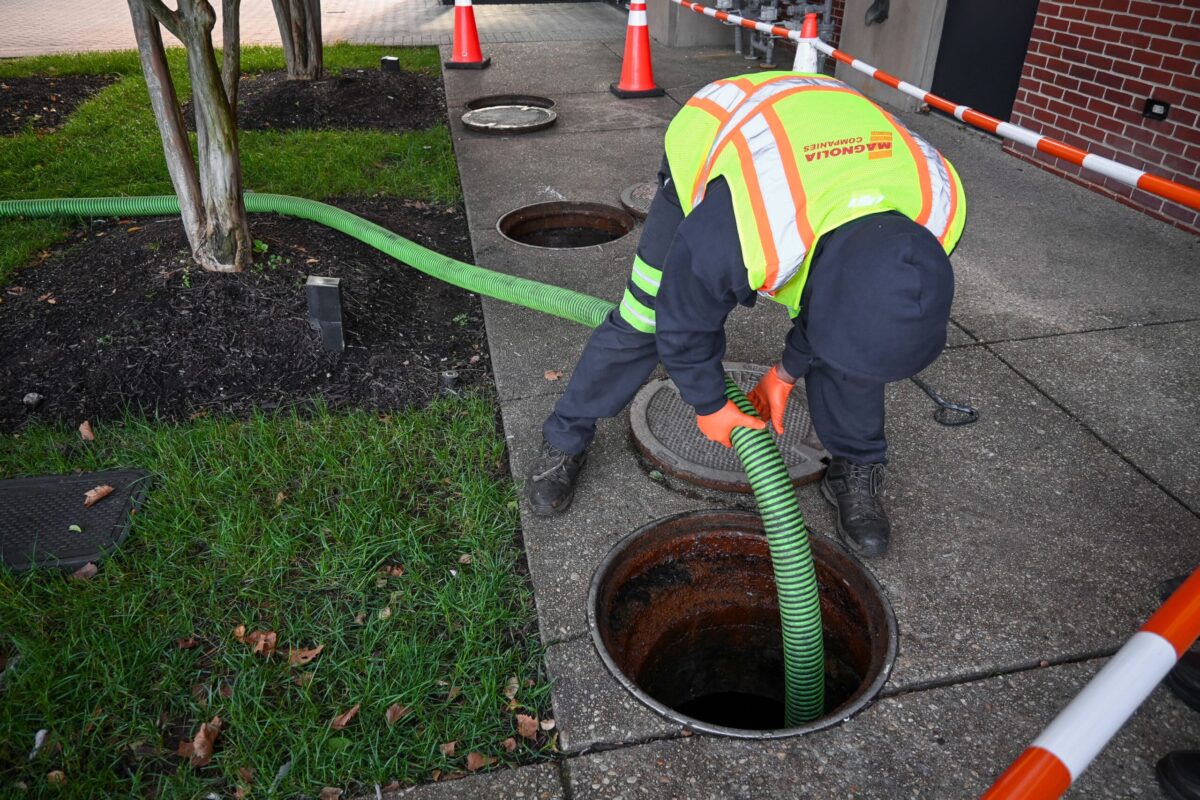
Septic tanks are closed systems, which means they have no way to get rid of the waste that flows into them. They serve as simple holding tanks, until a truck can come by and pump out the waste for safe disposal. Septic tank pumping is actually quite simple. A waste transport truck pulls up to the hookup for the tank and attaches a hose. A pump is then activated, which pumps out all of the waste currently in the tank. Then, the truck disconnects and drives off to a waste treatment plant.
Septic Tank Cleaning
If you’re asking this question, you probably aren’t aware of what a septic tank actually does. If you really don’t want to have your septic tank pumped out every month or two, though, let us explain what can happen. First, a tank that is allowed to fill up completely will start backing up into the building; this causes sewage to contaminate pipes in the building, some of which may be designed to carry fresh water. This will necessitate that all water pipes be cleaned out for sanitary purposes after the backup is remedied.
At the same time, the pressure buildup from all the sewage can actually cause the septic tank to crack. This sewage leaks into the surrounding ground, and commonly causes it to rise to the surface. So, if you don’t get your septic tank pumped out often enough, you could actually wind up with a fetid, festering swamp of sewage somewhere on your property.
On top of that, the cracked septic tank will now need to either be repaired or replaced, depending on how severe the crack is. This will typically cost a hefty amount of money to repair, which could have been avoided. The pipes leading to the septic tank could also burst, spilling sewage into other areas, including the building itself.
So, it is better for you, your building, and everyone in it to have your septic tank pumped as often as your technician says you need to. It will save time, money, and will just be better for everyone’s overall health.
Septic Tank FAQs
To work with our Washington metropolitan plumbers, simply give us a call! Our friendly staff is available 24/7, so whether you need a plumbing installation, repair or maintenance, we’re the number to dial. Contact us today to learn more about our commercial plumbing services or to request an estimate.
If you're not facing an emergency, your local health department should have the location of your septic tank on file. However, most people only search for their tank during a crisis when waiting for the health department isn't an option.
In that case, start by finding where the main sewer line exits your building. Once you've located the exit point, go outside with a probing rod and begin probing the area about 5 to 15 feet from the structure. Most tanks are buried just a few feet below the ground.
If these methods don't work, you'll likely need to hire a plumbing or septic contractor. Most professionals have locating equipment that can find the tank for you.
Determining how often a septic tank should be pumped depends on several factors and varies from household to household. Charts are available that consider factors like tank capacity, the number of household fixtures, and the number of people living in the home. These charts can provide reliable guidelines. Alternatively, many suggest a general rule of thumb: pump the tank every three years.
However, the most accurate approach is to pump the tank when the combined thickness of the scum (top layer) and sludge (bottom layer) exceeds 33% of the tank's total liquid volume. A septic tank naturally separates wastewater into three layers: the bottom layer, known as sludge, consists of heavier solids that settle; the top layer, or scum, is made up of lighter materials like grease; and the middle layer, called the clear zone, contains relatively clear wastewater.
When the scum and sludge together take up more than a third of the tank's liquid depth, it’s time to pump. This measurement can only be determined by a qualified contractor using tools like a sludge judge or dipstick to assess the tank’s condition accurately.
Your septic tank should always contain wastewater unless it is actively being pumped by a professional. The normal liquid level should sit at the invert (bottom) edge of the outlet line.
If the liquid is below this point, your tank may be leaking into the ground and needs to be inspected by a qualified septic contractor. If the liquid is above the invert of the outlet line, this indicates a problem with a component further down the system.
That's an excellent question! Most septic systems are equipped with inspection ports—3″ to 4″ pipes extending above ground at the inlet and outlet of the tanks. However, these ports should never be used for pumping the tank. Why? Because this method cannot fully empty the tank.
Septic tanks can have either a single chamber or a double chamber design, and the only proper way to ensure a complete evacuation is to uncover the manhole covers. If the lids are buried, excavation may be necessary. Once the manhole covers are exposed, the entire contents of the tank can be effectively pumped out for proper maintenance.
It's hard to say without a professional assessment. Septic systems can be complex, often featuring multiple components like pump tanks, aeration tanks, sand filters, and drain fields. A sewer line backup could stem from an issue between the house and the tank or a problem with a component further down the line. To accurately diagnose the problem, a qualified technician must inspect the system on-site.
Comprehensive Septic Tank Pumping Services in the Washington, DC Area
No matter what your septic tank pumping needs are, we can help you out. If you need septic tank pumping services, call Magnolia Plumbing, Heating & Cooling today to schedule an appointment with one of our expert technicians.
Ready to schedule a service
for your home or business?
Questions?