
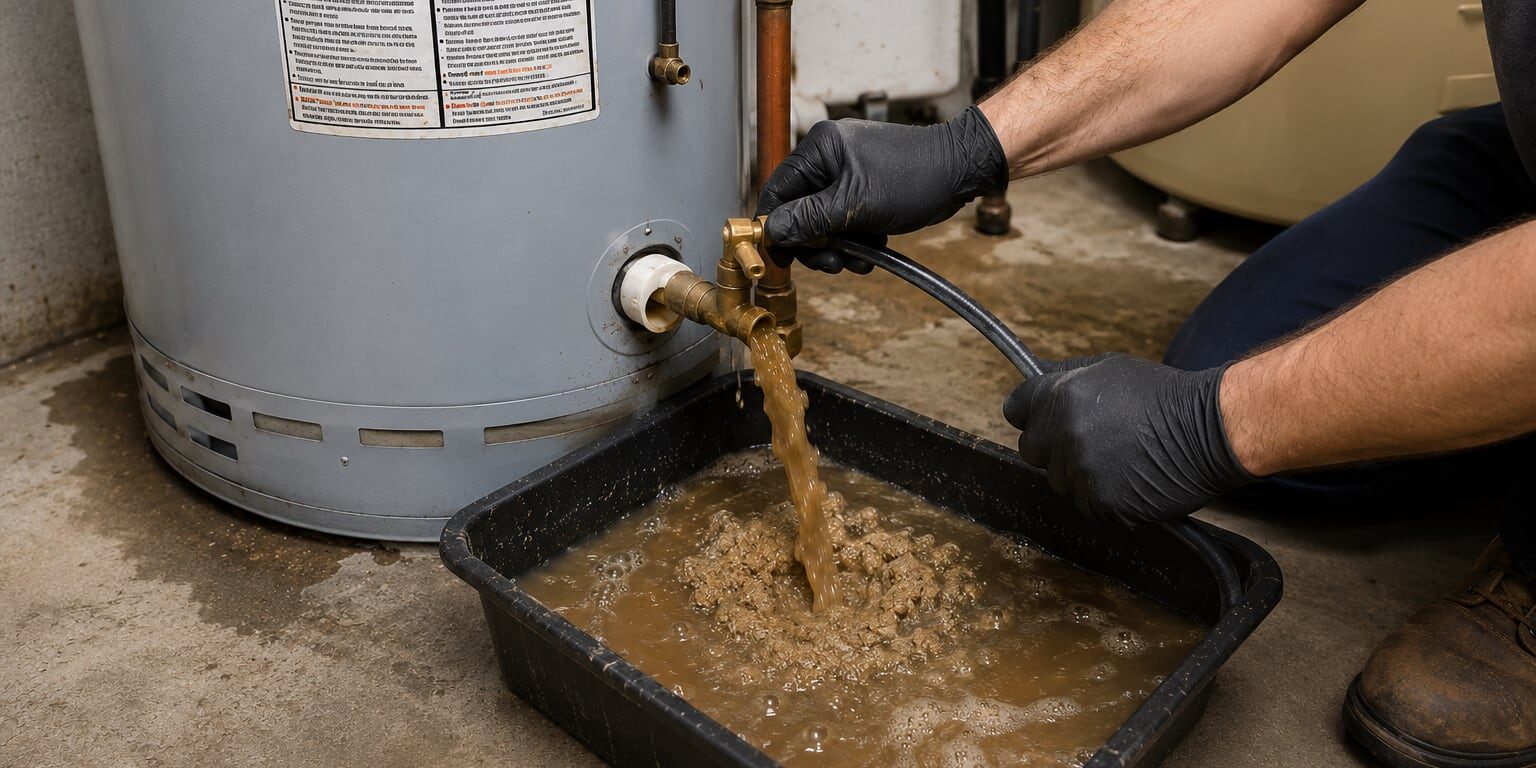
Water Heater Flush Service: Protect Your System From Hard Water Damage
Published: July 17, 2026 / Last Updated: July 23, 2026
This article explains what a water heater flush service is, why it’s important for homeowners in the Washington, D.C. area, and how professional flushing can protect your water heater from hard water damage. If you want to extend the life of your water heater and lower your energy bills, this guide is for you.
If you’ve lived in the Washington, D.C. area for a while, you know that “DMV water” can be tough on your fixtures. A water heater flush service is a professional tank flush that removes hard-water sediment from inside the heater, helping protect it from damage and restore efficiency. You’ve probably seen the white, crusty scale on your showerheads or the spots on your glassware, but the most significant damage caused by hard water isn’t visible—it’s happening deep inside your water heater. In traditional tank heaters, minerals can accumulate as sediment at the bottom of the tank. In tankless water heaters, scale can collect inside the heat exchanger and restrict performance.
Water hardness varies throughout Washington, D.C., Maryland, and Northern Virginia. DC Water reports typical hardness levels of about 70 to 120 parts per million, which can be enough to leave mineral deposits in plumbing fixtures and water-heating equipment. High concentrations of calcium and magnesium are common. While these minerals are harmless to drink, they are a nightmare for your plumbing, especially for homeowners who want to avoid higher energy bills, premature wear, and expensive water heater repair or eventual replacement. Below, you’ll see how hard water affects water heaters, the warning signs of sediment buildup such as rumbling or popping noises, what can happen if the tank is never flushed, and how Magnolia’s water heater flush service helps protect one of your home’s most expensive plumbing appliances.
The “Insulator” Effect: Why Your Water Heater Bills Are Rising
When hard water is heated, some of the minerals “fall out” of the liquid and settle at the bottom of the tank as sediment, and that mineral buildup comes from sediment in local water supplies. Over time, this creates a thick layer of rock-like scale.
If you have a gas water heater, the burner is located at the bottom of the unit. When a thick layer of sediment sits between the flame and the water, it acts as an insulator. Instead of transferring heat efficiently into the water, the burner must first heat the sediment layer. Removing that buildup can improve heat transfer, enhance how sediment flushes through the drain, and help the heater operate more efficiently.
This effect leads to two major problems:
- Increased Energy Costs: The water heater unit may need to run longer to reach the thermostat’s set temperature, increasing energy consumption. A clean tank can improve efficiency and help lower utility bills.
- Overheating: In some gas-fired tank heaters, heavy sediment buildup can contribute to localized overheating near the bottom of the tank. Over time, excessive heat and corrosion may increase the risk of damage, leaks, or complete tank failure.
Benefits of Regular Water Heater Flushing
Regular flushing is a crucial preventative maintenance task that offers numerous advantages. By performing this job regularly, you can:
- Improve your water heater’s efficiency and longevity.
- Potentially extend a water heater’s lifespan to over 12 years.
- Reduce energy demand.
- Potentially extend the life of the water heater.
Schedule regular water heater flushes to reduce the likelihood of emergency fixes and ensure reliable hot water for your home.
Listen Closely: The “Popping” Sound of Trouble
Have you ever heard a strange knocking or popping sound coming from your utility closet? Homeowners often describe it as sounding like popcorn or a low rumble.
This isn’t a ghost in the pipes—it may be the sound of kettling. As water gets trapped underneath the layers of mineral sediment, it boils and turns into steam. That steam then “pops” through the sediment layer to reach the rest of the water. If rusty or discolored water appears only when you use hot water, it may indicate corrosion in the water heater, an aging anode rod, or sediment inside the tank. Discoloration from both hot and cold faucets may have another source.
If your water heater is making these noises, it is a potential sign that the sediment buildup has reached a critical level. Rumbling noises, reduced hot water supply, and rust are common signs the unit needs flushing before the problem gets worse and a plumber needs to resolve it.
Stop the Scale With Magnolia
Magnolia has served the Washington, D.C. area for decades, and our technicians regularly encounter water heaters affected by sediment, scale, and mineral buildup. Traditional water heaters often have an expected service life of roughly 8 to 12 years, although actual lifespan varies based on the equipment, installation, water quality, usage, and maintenance. Routine flushing and inspection cannot guarantee a specific lifespan, but they can help maintain efficiency, identify developing problems, and reduce avoidable wear.
If you need a professional tank flush to remove existing sediment, our team is here to help with a diverse set of water heater services. Annual maintenance can help identify problems early and may help homeowners document that the unit has been maintained according to the manufacturer’s instructions. Always consult the specific warranty and owner’s manual for your model. Regular flushing and inspections can prevent costly repairs by helping us identify problems early and give you a clear path toward a more efficient home.
Request an Estimate for Water Heater Maintenance
Protect your home’s expensive appliances. Many manufacturers recommend flushing storage-tank water heaters approximately once a year, although the appropriate interval depends on the model, water quality, and manufacturer’s instructions. In homes with substantial mineral buildup, more frequent maintenance may be appropriate. Have a tankless unit? Tankless units generally require descaling rather than a traditional tank flush. Don’t let the DMV’s hard water quietly destroy your water heater and drive up your energy bills.
If you need a professional tank inspection and flush to clear out years of sediment, Magnolia has the expertise to help. A professional maintenance visit may also include additional inspections or testing, for example, an inspection of the temperature and pressure relief valve. Contact Magnolia today and breathe a sigh of relief knowing your plumbing is protected.
Share This Article:


Request An Estimate
Contact us for a free estimate. It's just one form or phone call away!
Join Our Newsletter
Submit your email to receive promotions.