The Business Owner’s Guide to HVAC Rooftop Unit Management (aka HVAC “Lid” Units)
Published: May 20, 2026 / Last Updated: May 31, 2026
If you manage a commercial facility in the DC or Baltimore metro area, you know that your rooftop units (RTUs)—often referred to in the industry as the “lids” of your building—are your most hardworking assets. They are also the most neglected.
Tucked away on the roof, these systems are “out of sight, out of mind” until a sudden failure sends temperatures soaring and tenants complaining. For a business owner or facility manager, HVAC management isn’t just about comfort; it’s about protecting your bottom line. At Magnolia, we leverage our fleet of over 200 vehicles and 75 years of industrial experience to ensure your facility stays operational 365 days a year.
Why Quarterly Filter Changes Aren’t Enough for Your HVAC System
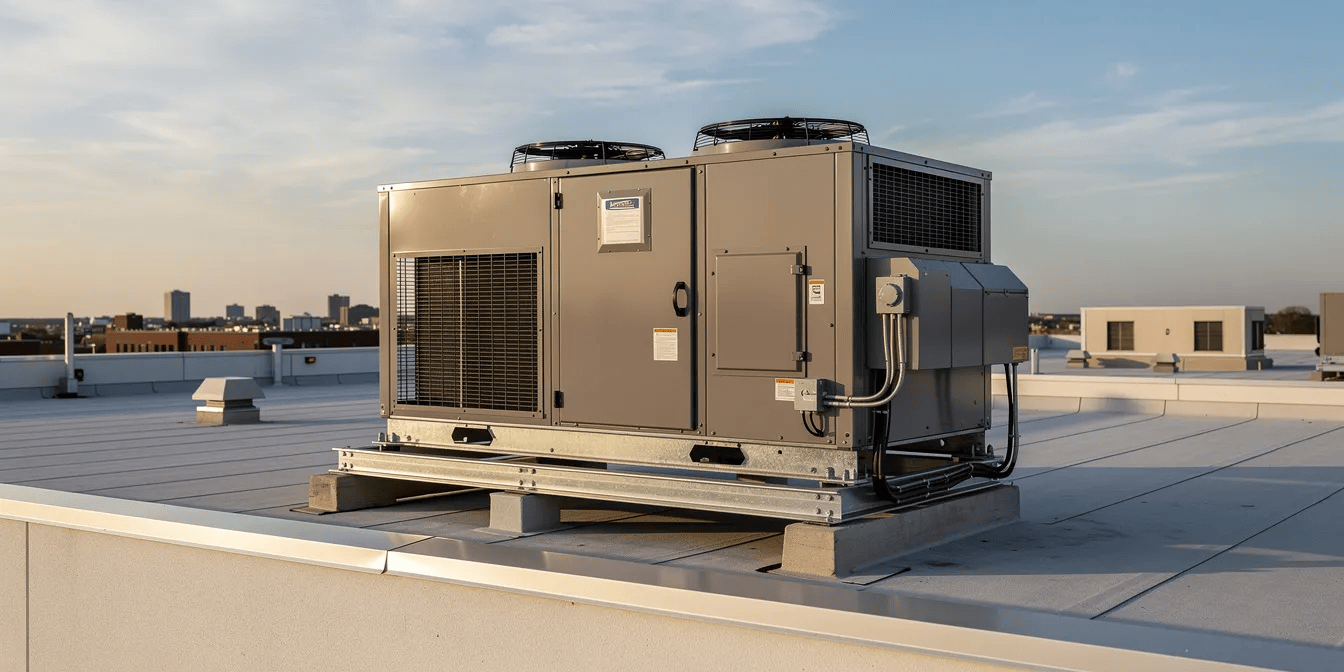
Many commercial maintenance contracts focus solely on changing filters every three months. While that’s a start, it’s far from a comprehensive strategy. For high-demand RTUs in large commercial buildings, rooftop HVAC systems are typically packaged rooftop systems, with each unit located in a single outdoor cabinet to provide conditioned air without taking up indoor space. This packaged rooftop approach supports air conditioning needs while protecting core HVAC components and other components in one place.
In a packaged setup, the compressor, condenser, evaporator coil, and blower fan are housed together in one compact box, making packaged rooftop units easier to service.
At Magnolia, we don’t just “change filters.” We perform a deep-system audit to ensure your “lids” are supporting heating, cooling, and ventilation performance at peak efficiency. This kind of packaged design helps save valuable indoor space and reduces noise indoors. We offer maintenance plans, including servicing and maintaining HVAC and plumbing systems for individual units or the building common area systems. We also include preventative maintenance, such as hydrojetting or snaking a building’s sanitary and storm systems, to prevent significant backups of grease, food, and waste that accumulate with regular use.
The Air Quality and Energy Efficiency Connection: Boosting Employee Productivity
Your HVAC system does more than regulate temperature; it controls the air your team breathes. Poor Indoor Air Quality (IAQ) is a leading cause of “Sick Building Syndrome,” which can manifest as fatigue, headaches, and decreased focus among employees.
Studies show that improved ventilation and air filtration can lead to a measurable increase in employee productivity and a decrease in sick days. Proper ventilation depends on the process of mixing fresh outside air with return air so the system can support healthy air conditioning throughout the building. By upgrading to high-efficiency MERV filters, you improve conditioned air quality because those filters capture dust, pollen, and other pollutants. Ensuring proper “make-up air” cycles also matters, and air intake dampers regulate the ratio of outdoor and indoor air in the system. You aren’t just maintaining a machine—you’re investing in your human capital. Economizers can use fresh outdoor air for cooling when conditions allow, helping reduce energy costs. Many modern rooftop units also help control humidity in humid climates, which can reduce mold risk.
Legal & Compliance: The Critical Side of Boiler Inspections
If your facility utilizes a commercial boiler, maintenance isn’t just a suggestion—it’s often a legal requirement. In Washington, D.C., and surrounding jurisdictions, commercial boilers must undergo regular inspections to remain in compliance with local safety codes.
Failing to stay up-to-date on your boiler certifications can lead to:
- Heavy Fines: Local inspectors can issue significant penalties for lapsed inspections.
- Insurance Liability: If a failure occurs and your maintenance records aren’t current, your insurance provider may deny the claim.
- Safety Risks: High-pressure systems require expert calibration to prevent dangerous malfunctions.
Magnolia’s commercial team stays ahead of these regulations, handling the scheduling and documentation for your inspections so you can focus on running your business.
No Job Too Big: The Magnolia Advantage for Rooftop HVAC Systems
Managing multiple properties or a large industrial complex requires a partner with the scale to support rooftop HVAC units across commercial buildings and larger portfolios with multiple units, centralizing service in one outdoor location. These systems can be mounted on rooftops or at ground level depending on the site, and rooftop placement helps protect equipment from ground hazards like vehicle strikes and vandalism. Their installation should include a structural review for weight restrictions and proper waterproofing around roof penetrations before equipment is installed. With a fleet of over 200 service vehicles, Magnolia is uniquely equipped to handle large-scale RTU replacements, complex boiler repairs, and emergency commercial service across the DMV, with easier access to rooftop AC units that keeps maintenance on one system and reduces disruption to occupants.
Correctly sized systems can be an energy efficient choice for large spaces, delivering strong energy efficiency and overall efficiency, especially with variable speed compressors and economizers in different climates as needs change and facilities keep expanding.
When your business’s climate control is on the line, you need more than a repairman; you need a fleet.
Request An Estimate
Protect your assets and your bottom line. In the world of property management, being proactive is the only way to stay ahead of costly repairs. Trust the fleet with over 75 years of experience to keep your facility running smoothly. Contact Magnolia today and let us handle the “heavy lifting” for your property.
Share This Article:


Request An Estimate
Contact us for a free estimate. It's just one form or phone call away!
Join Our Newsletter
Submit your email to receive promotions.